
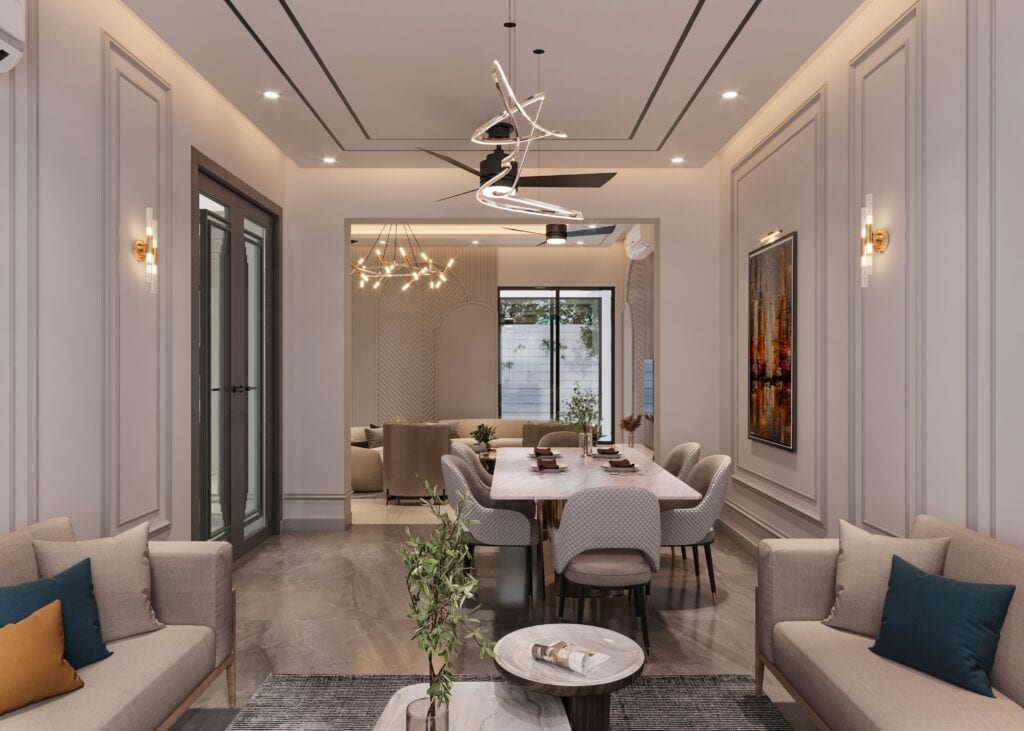
Choosing the right light for your room may seem simple, but with so many options available, selecting the right lighting can become confusing. Brightness, colour temperature, wattage, room size, energy efficiency and the type of light can all affect how comfortable and functional your room feels.
Whether you are setting up a new home, replacing old lights or simply looking for better lighting, this guide will help you understand the different options and choose the best lights for room based on your requirements.
The aim is not to choose the brightest light available, but to choose lighting that matches the purpose of the room, the amount of natural light available and the way you use the space.
How to Choose the Best Lights for Your Room
Choosing the best lights for room starts with understanding the room before selecting a product. Consider the room’s purpose, size, natural light, required brightness and the type of atmosphere you want to create.
Understand Your Room’s Lighting Needs
- Bedroom: Comfortable and relaxing lighting is generally suitable for a space used for rest.
- Living room: Balanced general lighting can be combined with decorative or accent lighting.
- Study/work room: Clear, focused lighting can make reading and desk work more comfortable.
- Kitchen: Bright and practical lighting is useful for food preparation and everyday tasks.
- Dining area: Lighting should provide comfortable visibility while also creating a pleasant atmosphere.
Choose the Right Type of Light
Different light fixtures are designed for different purposes. Instead of choosing a product only because it looks attractive, consider how the light will be used in the room. When choosing the best lights for room, consider the purpose of the space, the required brightness and the type of light fixture.
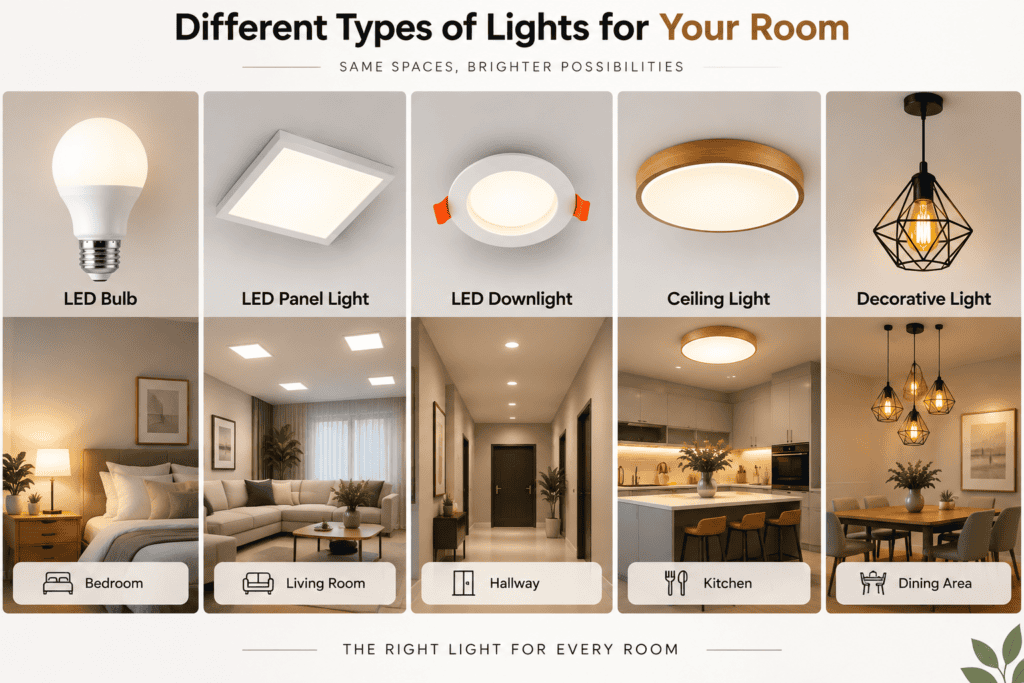
- LED Bulbs: A simple and flexible option for fixtures that use replaceable bulbs.
- LED Panels: Suitable for modern interiors where more uniform room illumination is preferred.
- LED Downlights: Useful for focused or ceiling-mounted lighting arrangements.
- Ceiling Lights: A practical choice for general room illumination.
- Decorative Lights: Useful for creating visual interest and adding an accent to the interior.
Choose the Right Brightness and Wattage
Brightness should be considered according to the size and purpose of the room. Wattage tells you about the electrical power used by a light source, but it does not by itself tell you how bright the room will feel.
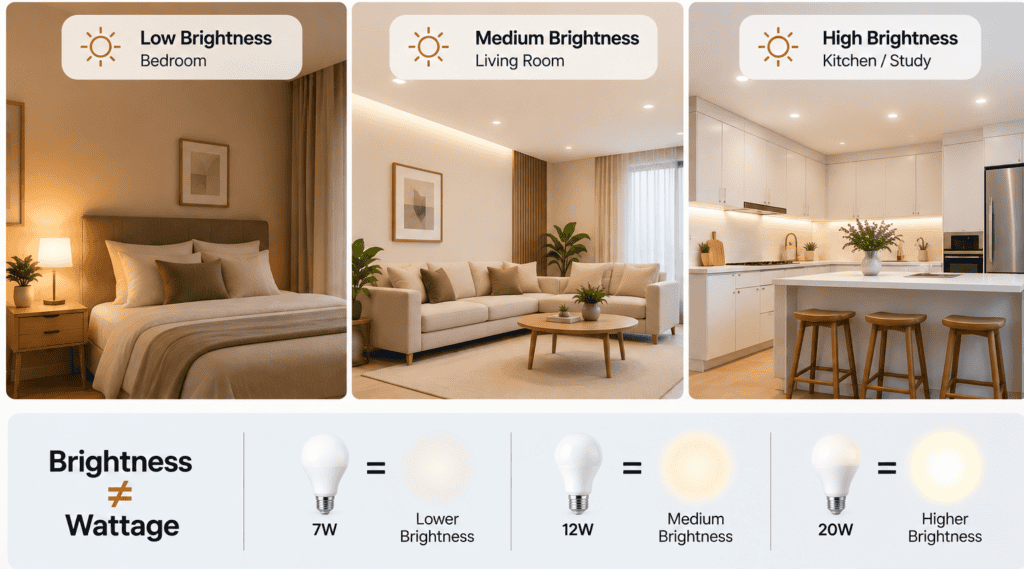
Modern LED products can provide useful brightness with comparatively low power use. For more information, see this Philips LED lighting guide.
- Room size: Larger spaces may require more than one light source or a suitable combination of fixtures.
- Required brightness: A study area may need clearer task lighting than a relaxing bedroom.
- Wattage: Compare wattage together with the product’s brightness specification rather than using wattage alone.
- More wattage is not automatically better: Excessively bright lighting can be uncomfortable and may waste energy. When choosing the best lights for room, consider the room size, required brightness and the purpose of the space.
Warm White vs Cool White vs Daylight
Colour temperature affects the appearance and mood of a room. The most suitable option depends on the purpose of the space and the atmosphere you prefer.
| Light Type | Typical Use | Effect |
|---|---|---|
| Warm White | Bedroom / relaxing spaces | Soft and comfortable feel |
| Cool White | Living room / general areas | Clean and balanced appearance |
| Daylight | Study / work areas | Clear and focused appearance |
Important: These are general room-use guidelines. Personal preference, interior design, existing natural light and the specific product’s specifications should also be considered.
Best Light for Different Rooms
Choosing the best lights for room also depends on the function of each space, such as bedrooms, living rooms, study areas and kitchens.
Best Light for Bedroom
A bedroom usually benefits from lighting that feels comfortable rather than harsh. Warm or softer lighting can be suitable for relaxing and winding down. Dimmable options can also be useful where available.
Best Light for Living Room
The living room often needs flexible lighting because it may be used for conversations, entertainment, reading and everyday activities. General ceiling lighting can be combined with decorative or accent lighting.
Best Light for Study/Work Room
Study and work areas benefit from clear, focused lighting. The light should support reading and screen-based tasks without creating uncomfortable glare.
Best Light for Kitchen
Kitchen lighting should be bright and practical. Good visibility is especially important around work surfaces, cooking areas and storage spaces.
LED Bulb vs LED Panel Light
Both LED bulbs and LED panels can be used for home lighting, but they differ in installation, design and the way light is distributed.
| Feature | LED Bulb | LED Panel |
|---|---|---|
| Installation | Easy for compatible fixtures | Usually requires fitting |
| Design | Simple and flexible | Modern and integrated |
| Light distribution | Depends on bulb and fixture | Often more uniform |
| Best for | Basic and flexible lighting | Modern room lighting |
Buying tip: The better option depends on the existing fixture, installation requirements, desired appearance and the type of light distribution you want.
Energy-Efficient Lighting for Your Home
LED lighting is widely used for homes because it can provide useful brightness with relatively low power consumption. However, energy efficiency also depends on how many lights are used, how long they remain on and whether the brightness is appropriate for the space.
- Use LED lights: Consider LED products when replacing older, less efficient lighting.
- Consider energy consumption: Compare power ratings when choosing products for frequent daily use.
- Think about long-term usage: A small difference in power consumption can matter when a light is used for many hours.
- Choose the right brightness: Avoid using a much brighter light than the room actually needs.
- Avoid unnecessary lighting: Switch off lights when they are not required and make use of natural light where practical.
Best Lights for Different Home Requirements
| Requirement | What to Consider |
|---|---|
| Bedroom | Comfortable lighting, softer tones and suitable brightness |
| Living room | Balanced general lighting with optional decorative or accent lighting |
| Study | Focused and clear lighting with comfortable visibility |
| Kitchen | Bright, practical lighting for work areas |
| Decorative purpose | Accent lighting, design and placement |
Common Mistakes to Avoid When Choosing Room Lights
- Choosing a light only by wattage.
- Ignoring the room size and layout.
- Not considering colour temperature.
- Using exactly the same type of lighting in every room.
- Choosing a light only because of its design.
- Ignoring energy efficiency for lights used for long hours.
Room Lighting Tips
- Consider room size: Match the lighting arrangement to the space instead of relying on a single product specification.
- Use natural light: Check how much daylight the room receives before deciding how much artificial lighting is needed.
- Choose lighting according to the task: Reading, cooking, relaxing and general activities may need different lighting approaches.
- Avoid overly bright bedroom lighting: A comfortable, softer atmosphere can be more suitable for a bedroom.
- Keep study areas adequately lit: Focused lighting can improve visibility for reading and desk work.
- Combine multiple light sources: General, task and accent lighting can be used together when the room requires flexibility. A practical lighting plan does not have to be complicated. choosing the best lights for room, Start with the room’s main purpose, then decide the type of fixture, brightness and colour temperature that support that purpose.
Frequently Asked Questions About the Best Lights for Room
1. Which light is best for a bedroom?
When choosing the best lights for room, consider the room’s existing natural light, size and your preferred atmosphere
2. Which LED light is best for a living room?
The suitable option depends on the room size, layout and desired atmosphere. A living room can use general ceiling lighting along with decorative or accent lights for flexibility.
3. Is warm white or cool white better for a bedroom?
Warm white is commonly preferred for relaxing spaces because it creates a softer appearance. However, personal preference and the rest of the room’s lighting should also be considered.
4. How many watts of LED light are needed for a room?
There is no single wattage that works for every room. The requirement depends on room size, desired brightness, fixture type, existing natural light and how the room is used. Compare brightness specifications rather than choosing only by wattage.
5. Are LED panel lights better than LED bulbs?
Neither is automatically better for every situation. LED panels can provide a more integrated and uniform look, while LED bulbs can be easier to replace and more flexible with compatible fixtures.
6. Which light is best for a study room?
A study room generally benefits from clear, focused lighting that supports reading and desk work while avoiding uncomfortable glare.
7. Are LED lights energy efficient?
LED lights are generally considered an energy-efficient lighting option, but actual energy use depends on the product’s power rating and how long it is used.
8. How do I choose the right light for my room?
Start with the room’s purpose and size. Then compare the light type, brightness, colour temperature, power consumption, installation requirements and design before making a decision.
Conclusion
Choosing the best lights for room depends on your room size, purpose, brightness requirements, colour temperature and personal preference. Instead of choosing a light only because it looks good, consider how you actually use the room.
For bedrooms, comfortable lighting can create a more relaxing atmosphere. Living rooms may benefit from a combination of general and decorative lighting, while study areas need clear and focused illumination. Kitchens generally require bright and practical lighting for everyday tasks.
When comparing LED bulbs and LED panels, consider installation, design, light distribution and the needs of the room. For long-term use, energy efficiency and appropriate brightness should also be part of the decision.
For more information about electrical products and lighting solutions, explore electrictrafehub and find lighting options that suit your home.