
Choosing the Best ceiling fans for home involves more than simply selecting a design you like. Room size, fan sweep, air delivery, motor technology, energy consumption, speed and noise level can all affect your choice.
Whether you are replacing an old fan or setting up a new room, it is useful to compare the important specifications before making a purchase. This guide explains the key factors to consider when choosing the best ceiling fans for home.

How to Choose the Best Ceiling Fans for Home
Before buying a ceiling fan, consider the following factors:
- Room size
- Fan sweep
- Air delivery
- Motor type
- RPM
- Energy efficiency
- Number of blades
- Noise level
- Design
- Features
- Warranty
1. Choose the Right Ceiling Fan Size
Fan size should match the room where the fan will be installed. A suitable fan size can help provide comfortable airflow throughout the space.
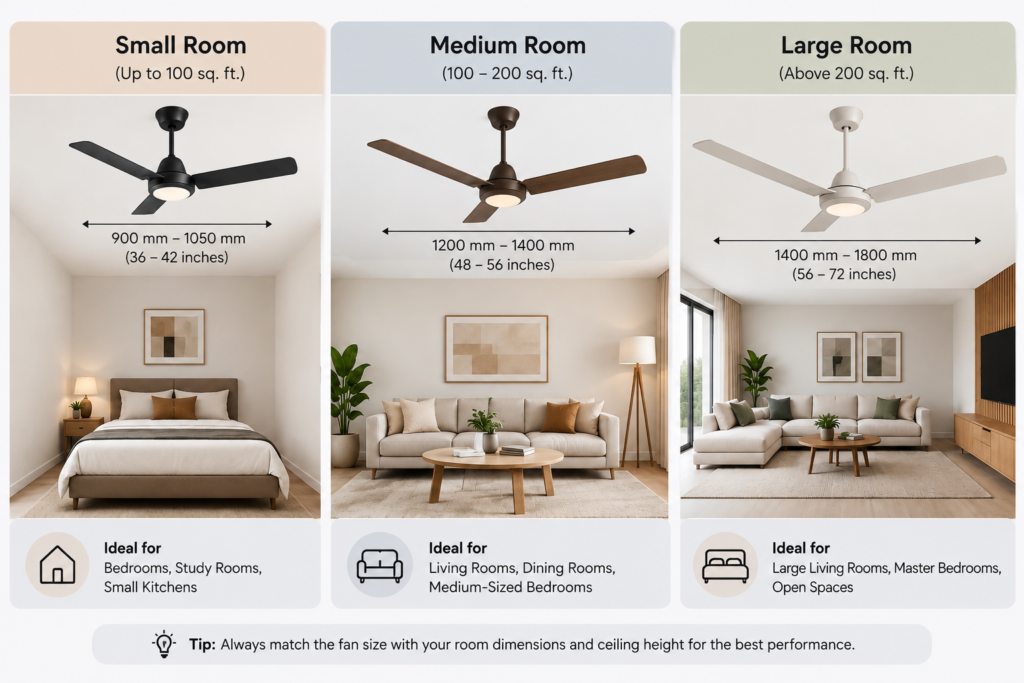
Small Rooms
Smaller rooms generally require a suitable fan sweep according to their available space. Always check the manufacturer’s recommended application before selecting a model.
Medium-Sized Rooms
Medium-sized rooms may work well with standard ceiling fans, depending on the room dimensions and layout. Consider fan sweep and air delivery along with the overall room size.
Large Rooms
Large rooms may require a larger fan sweep or, depending on the layout, more than one fan. Room dimensions and airflow requirements should be considered together.
Tip: Always check the actual product specifications and manufacturer’s recommendations instead of relying only on general size assumptions.
2. Understand Air Delivery
Air delivery indicates how much air a ceiling fan can circulate. It is an important specification when comparing different fans.
Don’t look at RPM alone. Consider:
- Air delivery
- RPM
- Fan sweep
- Room size
- Motor technology
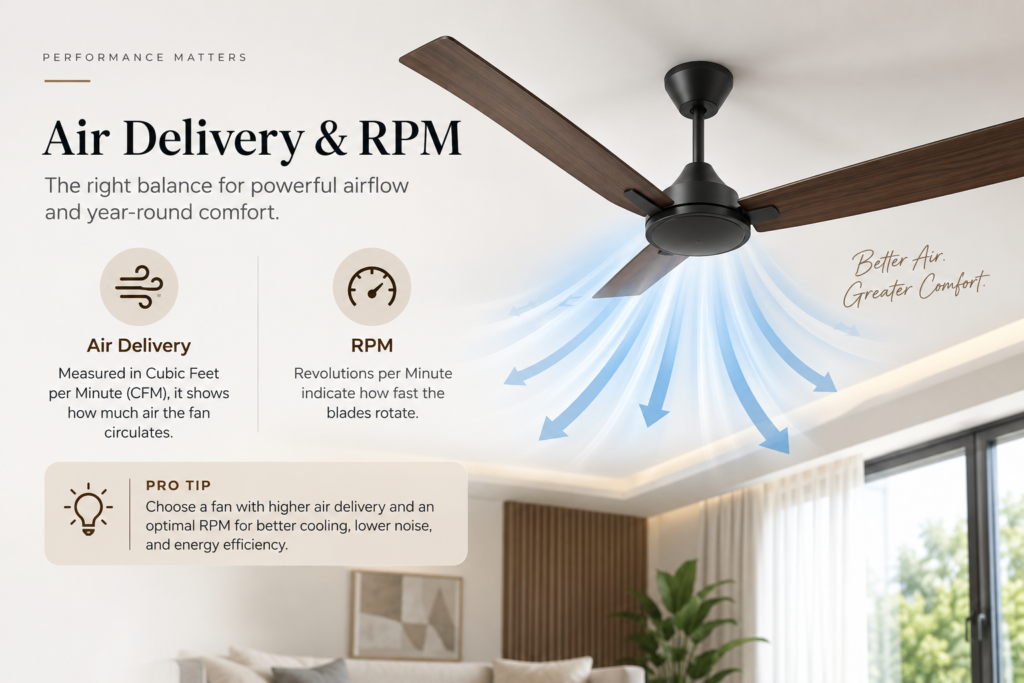
A higher RPM does not automatically mean that a fan is suitable for every room. The overall specifications should match your requirements.
3. BLDC vs Conventional Ceiling Fans
BLDC and conventional ceiling fans use different motor technologies.
BLDC Fans
BLDC fans use brushless DC motor technology and are commonly considered by users who want to focus on energy efficiency. Depending on the model, they may also offer features such as remote controls and multiple speed settings.For more information about BLDC ceiling fan technology and available models, visit Atomberg’s official website.
Conventional Fans
Conventional ceiling fans use traditional motor technology and are available in different price ranges. They can be suitable for buyers looking for simpler options.
For a detailed comparison, you can later link BLDC vs Normal Fan here. The reference PDF also identifies this as a related internal-link opportunity.
4. Check Energy Efficiency and Power Consumption
If a ceiling fan operates for several hours every day, its electricity consumption becomes an important consideration.
What Is Wattage?
Wattage indicates the electrical power used by the fan while operating under its rated conditions.
When comparing fans, look at the rated power consumption along with other performance specifications.
How Can Fan Electricity Consumption Be Estimated?
A simple calculation is:
Electricity consumed = Power (kW) × Usage hours
Actual electricity costs depend on usage and the applicable electricity tariff.
5. How Many Blades Should a Ceiling Fan Have?
Ceiling fans are available with different blade counts and designs. Blade count alone should not determine your choice.
Instead, compare:
- Airflow
- Motor performance
- Blade design
- Fan size
- Room requirements
The overall product specifications are more useful than focusing only on the number of blades.
6. Check RPM and Fan Performance
RPM stands for Revolutions Per Minute and indicates how many times the fan rotates in one minute.
RPM can be useful when comparing ceiling fans, but it should be considered together with:
- Air delivery
- Fan sweep
- Motor type
- Room size
- Overall fan performance
A higher RPM does not automatically make a fan suitable for every room.
7. Best Ceiling Fans for Different Rooms
Choosing the best ceiling fans for home depends on the requirements of each room. A bedroom may need quieter operation, while a living room may need good air circulation and a suitable design.
| Room | What to Consider |
|---|---|
| Bedroom | Low noise, comfortable airflow, energy efficiency and convenient controls |
| Living Room | Air circulation, fan size, design and room dimensions |
| Kitchen | Suitable airflow, easy maintenance and installation requirements |
| Study / Work Room | Comfortable airflow, low noise and energy efficiency |
8. Features to Look for in a Modern Ceiling Fan
Depending on the model, modern ceiling fans may offer features such as:
- Remote control
- Multiple speed settings
- Timer
- Energy-efficient motor
- Low-noise operation
- Modern design
- Warranty
- Easy maintenance
Always check the actual product specifications because features can vary between models.
9. Common Mistakes to Avoid When Buying a Ceiling Fan
Don’t Choose Only Based on Price
Compare specifications, power consumption, warranty and intended use instead of looking only at the purchase price.
Don’t Ignore Room Size
The fan should be suitable for the room’s dimensions and layout. The wrong size may affect the airflow experience.
Don’t Look Only at Design
A stylish design is useful, but performance specifications should also be considered.
Don’t Ignore Electricity Consumption
This is particularly important if the fan will run for several hours every day.
Don’t Ignore Installation Requirements
Check ceiling height, mounting requirements and the manufacturer’s installation instructions before purchase.
10. How to Choose the Best Ceiling Fan Based on Your Requirements
Choosing the best ceiling fans for home depends on your room size, energy-saving needs, preferred features and budget.
| Your Requirement | What to Consider |
|---|---|
| Energy saving | BLDC / efficient motor |
| Bedroom | Low noise + comfortable airflow |
| Large room | Suitable sweep + air delivery |
| Modern home | Design + useful features |
| Long daily usage | Energy efficiency |
| Budget-focused | Features + specifications + price |
11. Safety and Maintenance Tips
- Proper installation: Make sure the fan is installed correctly.
- Regular cleaning: Clean the fan regularly to reduce dust buildup.
- Check fittings: Check for loose screws or fittings when required.
- Watch for unusual noise or vibration: Pay attention to unusual changes during operation.
- Electrical safety: Get electrical connections handled by a qualified professional where required.
- Follow manufacturer instructions: Follow the installation, operation and maintenance instructions supplied with the product.
12. Frequently Asked Questions
What are the best ceiling fans for home?
The right ceiling fan depends on room size, airflow requirements, energy-efficiency priorities, noise level, design, budget and features.
How do I choose the right ceiling fan size?
Start with the room dimensions and layout. Then compare fan sweep, air delivery and the manufacturer’s recommendations for the specific model.
Are BLDC fans suitable for home use?
BLDC fans can be considered when energy efficiency and convenient features are important. The final choice should depend on the product specifications and your requirements.
Which ceiling fan is suitable for a bedroom?
For a bedroom, consider comfortable airflow, low-noise operation, energy efficiency and convenient controls where available.
Are 3-blade fans better than 4-blade fans?
Blade count alone does not determine which fan is suitable. Air delivery, motor performance, blade design, fan size and room requirements should also be considered.
Does a ceiling fan consume a lot of electricity?
Electricity consumption depends on the fan’s rated power and how many hours it operates.
What should I check before buying a ceiling fan?
Check room size, fan sweep, air delivery, motor type, RPM, power consumption, blade design, noise level, features, installation requirements and warranty.
Final Thoughts
Choosing the best ceiling fans for home is not simply about selecting the most expensive or feature-rich model. Room size, airflow, motor technology, energy consumption, noise level, design and everyday requirements should all be considered.
Whether you need a fan for a bedroom, living room, kitchen or study area, start by understanding the requirements of the space and then compare the specifications of different models.
For homeowners interested in energy efficiency, BLDC technology can be one option to consider, while conventional fans may suit buyers looking for simpler choices.
Explore electrictradehub.com range of ceiling fans and electrical products to find options suitable for your home.